Dear Church Family,
As we finish our fiscal year this Sunday, would you allow me to make a plea in the area of giving? We are still in need of tithes and offerings to be over our ministry expenditures for the year. We are also short of our Great Commission Offering goal. Lakeside has always been a generous family of believers, but we also know there is always a spiritual battle and our obedience is always at stake. Most of you know when it comes to this spiritual discipline I simply ask that you pray about your part and be obedient to what the LORD tells you. We praise God for the ministry we were able to accomplish and have faith He will provide this next year as well.
I found this great devotional from a young man named Oloyede Olayinka—
Have you ever had this thought too, one about creation and redemption that becomes difficult to shake once you really sit with it? God knew exactly what creating us would cost Him before He ever said, “Let us make man in our image.” He knew, and He went ahead and created us anyway.
Think about that for a moment.
The fall did not surprise God. The Cross was not heaven’s emergency meeting after Eden went terribly wrong. Scripture speaks of Christ as the Lamb “foreordained before the foundation of the world” (1 Pet. 1:19–20), and of God as the One “declaring the end from the beginning” (Isa. 46:10). So God knew.
He knew what Adam would do. He knew what we would become. He knew the violence, pride, hatred, idolatry and death that would enter His beautiful world. He knew that creatures capable of genuinely loving Him could also rebel against Him. And He knew what it would cost Him to redeem them.
That does not make God the author of Adam’s sin. Scripture places the transgression squarely upon man: “by one man sin entered into the world” (Rom. 5:12). James is equally emphatic that God does not tempt anyone with evil (James 1:13–14). Man owns the rebellion. But God chose to bear the cost of rescuing the rebels.
Almost immediately after man fell, God came looking for him: “Adam… Where art thou?” (Gen. 3:9). And before Adam and Eve had even left Eden, God had already promised that the serpent would not have the final word. The seed of the woman would crush his head, though He Himself would be wounded (Gen. 3:15).
Humanity made the mess. God promised the rescue. And the rest of Scripture is essentially the long road from that promise to a hill outside Jerusalem, where God Himself, in the person of His Son, entered our suffering and bore our sin. That is what makes me ask with David: “What is man, that thou art mindful of him? and the son of man, that thou visitest him?” Psalm 8:4
Seriously, what is man? Why are these tiny creatures on this speck of dust in God’s universe worth such attention?
Jesus gives us an astonishing glimpse into heaven’s valuation of a human being: “For what shall it profit a man, if he shall gain the whole world, and lose his own soul?” Mark 8:36
Think about that comparison. Put the world on one side of the scale, its kingdoms, fortunes, cities, gold, palaces and treasures. Then put one human soul on the other. Jesus asks what advantage there would be in possessing the former while losing the latter.
Perhaps we have spent so much time emphasizing human depravity that we sometimes forget something equally biblical: fallen man is still someone God profoundly loves.
Sin tells me how terribly humanity has fallen. The Cross tells me how far God was willing to go to rescue fallen humanity. “For God so loved the world, that he gave his only begotten Son…” (John 3:16).
Not merely felt something for the world. GAVE.
And what did He give? Not another bull, goat, prophet or angel. He gave His Son. “For God was in Christ, reconciling the world unto himself…” (2 Cor. 5:19).
This does not mean God needed humanity because something was deficient in Him. The God who “giveth to all life, and breath, and all things” is not served as though He “needed any thing” from us (Acts 17:25). Redemption was not divine loneliness seeking completion. It was divine love overflowing toward creatures who had nothing with which to repay Him.
Perhaps this is why Jesus tells stories that seem almost economically irrational. A shepherd loses one sheep and goes after it. A woman loses one piece of silver and searches until she finds it. A father watches a rebellious son disappear into a far country, yet when that son finally returns, the father runs to meet him.
And Jesus tells us: “Likewise joy shall be in heaven over one sinner that repenteth…” Luke 15:7
One sinner. Heaven celebrates one.
The point is not that the ninety-nine were ninety-nine regenerate people who needed no Savior. Jesus was answering those who despised His reception of sinners. The point is the extraordinary value placed upon the lost and the joy of God when one sinner comes home.
That tells me something about God’s valuation of individual human beings that no theological system should be permitted to explain away.
And this is what makes Calvary breathtaking to me. God created humanity knowing Eden would happen. Eden happened because man rebelled, not because God sinned through him. Yet God did not stand at a safe distance and say, “You made the mess; now solve it.”
The Creator entered the creation.
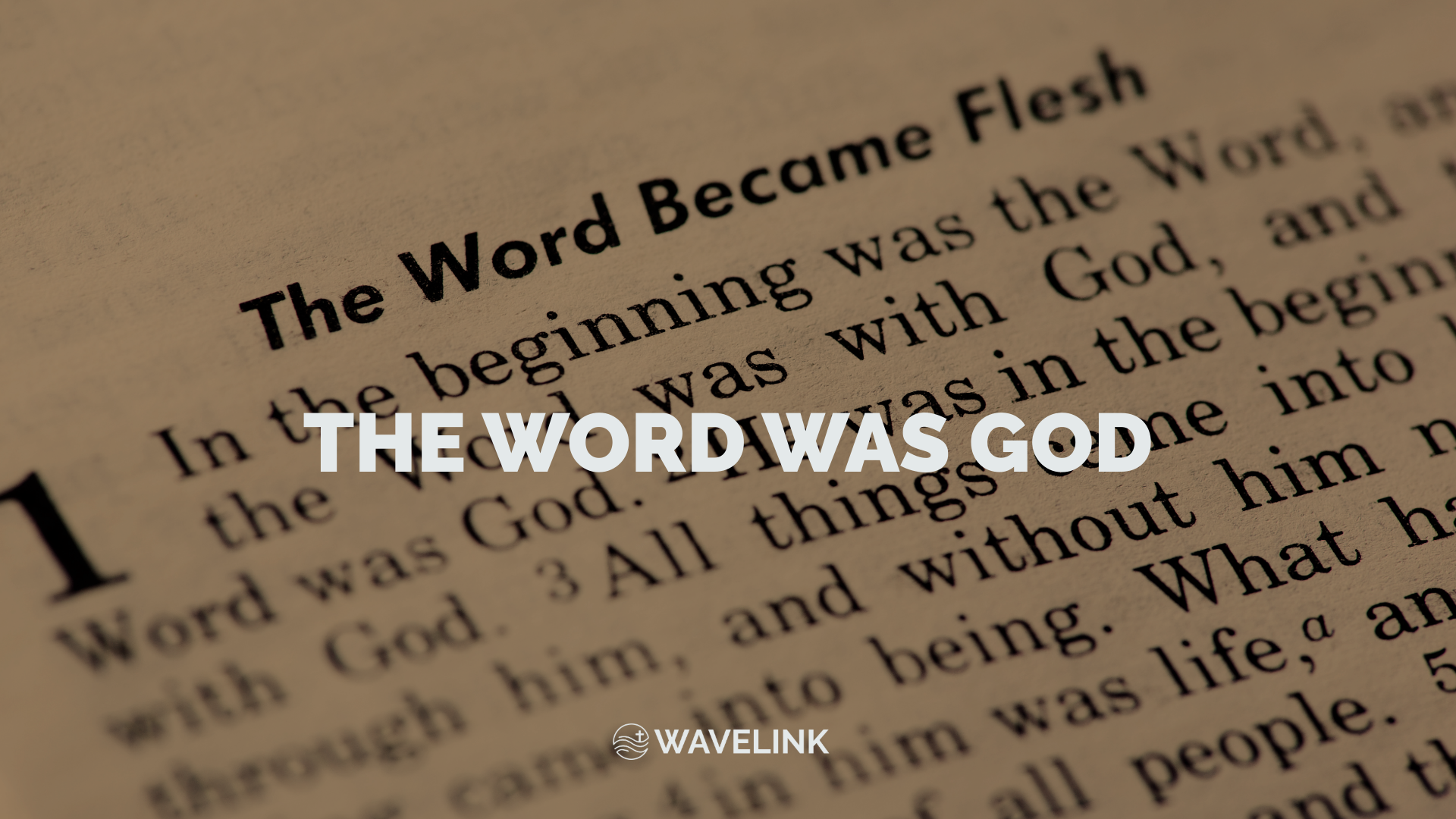
“The Word was made flesh, and dwelt among us” (John 1:14). The Judge stepped into the world of the guilty. The Shepherd came searching for the lost. The Physician entered the colony of the diseased. Life entered the dominion of death.
And eventually: “God commendeth his love toward us, in that, while we were yet sinners, Christ died for us.” Romans 5:8
This is why I cannot make the Gospel fundamentally about a God reluctant to save sinners who must somehow discover whether they are among those for whom mercy was actually intended.
The Christ I encounter in Scripture stands over Jerusalem saying: “How often would I have gathered thy children together, even as a hen gathereth her chickens under her wings, and ye would not!” Matthew 23:37
There is love there. There is invitation there. There is human refusal there. And there is heartbreak there. The tragedy is not that there was no shelter. The tragedy is that they would not come beneath the wings.
John says the same thing differently: “And this is the condemnation, that light is come into the world, and men loved darkness rather than light, because their deeds were evil.” John 3:19
The Light came. Men loved darkness. That is what makes judgment morally serious. The problem is not an insufficiency in Christ. The problem is our terrible capacity to refuse the God who came after us.
Yet the invitation remains: “And let him that is athirst come. And whosoever will, let him take the water of life freely.” Revelation 22:17
So perhaps the most astonishing thing about humanity is not merely that we fell. It is that God knew we would fall, knew what rescuing us would cost, created us nevertheless, came looking for us when we rebelled, entered our world Himself, stretched His hands upon a Cross, and still calls sinners home.
What is man, that Thou art mindful of him? I still don’t completely know. But Calvary tells me this much: whatever man is, God considered him worth coming after.
And whatever salvation would cost, God Himself provided the Lamb, not for some specially selected class of sinners, but for the fallen world, for every sinner caught in Adam’s ruin. That is the breathtaking beauty of Paul’s “MUCH MORE” in redemption.
Press On!
Mark
Upcoming Events