What Happened to Jesus in the Grave?
What Happened to Jesus in the Grave?
Preachers and theologians rightly highlight the work of Jesus Christ in his death upon the cross (Mark 10:45; John 12:27). The eternal Word became a human being (John 1:1, 14; Phil. 2:7) to perfect our humanity by obeying where we did not (Eph. 1:10; Heb. 2:10). He reunites us with God by atoning for our sins through suffering death as our substitute (Isa. 52:13–53:12; 2 Cor. 5:21). Christ’s death on the cross is foundational for our redemption, and the redeemed must believe it in the heart and confess it by mouth (Rom. 10:9–10; 1 Cor. 15:3). However, neither Christ nor his work ended with his literal death upon the cross.
Christ’s death on the cross on Friday was followed by his resurrection on Sunday. The narratives of all four Gospels build toward the dual truth of his death and resurrection. The New Testament’s credal summaries also emphasize this twofold event: Christ died, Christ arose (Rom. 1:4; 1 Cor. 15:3–4). Without his resurrection from death, Christians have no hope of justification (Rom. 4:25; 1 Cor. 15:12–17). Christ conquered death so he could ascend to his eternal throne in victory (Acts 1:9–11; Eph. 4:8–10), present his once-for-all sacrifice to reconcile us with God (Heb. 9:12; 10:10–14), and continually intercede for believers (Rom. 8:34; Heb. 7:25). Christ will return one day (1 Thess. 4:13–17; Rev. 19:11–13), render final judgment (Matt. 25:31–46; Rev. 20:11–15), and reign forever (Dan. 7:14; Rev. 11:15).
But wait a minute! What happened to Jesus Christ between Friday and Sunday? Surely, the second day, that Saturday, has significance. What happened to Jesus while he was in the grave? Did he cease to exist? If he continued to exist, where did he go? Orthodox Christians believe Christ never ceased existing, either in his person, his divine nature, or his human nature. Because Christ is God (John 20:28; Titus 2:13), the second Person of the eternal Trinity (Matt. 28:19; 2 Cor. 13:13), he remains unchangeable in his divine nature and personhood (Ps. 90:2; Heb. 13:8). Even as he suffers death, he remains the eternal Word.
What about Christ’s humanity then? Did he cease to exist with his bodily death? Christ is truly human (John 8:40; 1 Tim. 2:5), just like you and me, so his humanity includes his body and his soul (Gen. 2:7; Matt. 10:28). As a human being his physical body died, although it did not suffer “corruption” (Ps. 16:10; Acts 2:27, 31; 13:35). As a human being Christ also has a soul, and human souls continue beyond physical death (Eccl. 12:7; Matt. 10:28). Christ was dead in body on Saturday, but his human soul remained and his divine Person was undiminished.
So, where was the soul of Christ on Saturday as his body lay in the grave (Isa. 53:9; Matt. 27:57–60)? Scattered Scripture texts indicate Christ was active on Saturday. On Friday, he promised the thief on the cross, “Today, you will be with me in paradise” (Luke 23:43). “Paradise” refers to the Garden of Eden, to which we no longer have natural access in this age (Gen. 3:23–24; Rev. 2:7). While “today” may be used in Scripture to indicate divine eternity (Heb. 1:5–6; 5:5–6; 2 Pet. 3:8), a “day” should usually be taken in a literal way when referring to creatures (Gen. 1:5, 8, 13, etc.; Luke 24:46). Christ, who remained truly human, was in paradise.
Paradise may be the place where believers awaited their resurrection through the Messiah’s resurrection (Matt. 27:50–53). Jesus referred to this place as ton kolpon ’Abraam, “the side of Abraham” or “Abraham’s bosom” (Luke 16:22–23). The discourse Jesus delivered in Luke 16:19–31 ought not be classified a parable, for it did not use earthly things to describe eternal realities. Instead, he describes events with definite historical and eternal dimensions—naming real human persons, quoting their conversation, and detailing a geography—and develops a lesson from eternal reality for those on earth.
The geography of Hades included, first, a place of blessing with Abraham, and second, a place of torment for the rich man (v. 23). These two places were separated by an unbridgeable chasm (v. 26). The Greek word hades translated the Hebrew word sheol (Eccl. 9:10; Ps. 16:10; Acts 2:27; etc.) Sheol was the abode of the dead, inclusive of both believers and unbelievers (Pss. 18:5; 139:7–8; cf. 2 Sam. 12:23). Believers expected they would be raised bodily from death (Job 19:25–27; Ezek. 37:1–14; Dan. 12:2). It should also be noted that Sheol and Hades are distinguished from the eternal lake of fire (Rev. 20:14).
The direction to Sheol from our present life is down (Num. 16:30–33; Job 7:9). The New Testament portrays Christ moving downward in three major ways: First, some passages which mention Christ descending refer to the eternal Word becoming incarnate (John 3:13; Phil. 2:7). Second, others refer to his future Second Coming from heaven to earth (Matt. 24:30; 1 Thess. 4:13). A third group of descent passages seems to refer to his movement from earth to the abode of the dead: “But what does ‘he ascended’ mean except that he also descended to the lower parts of the earth?” (Eph. 4:9). “Or, ‘Who will go down into the abyss?’ that is, to bring Christ up from the dead” (Rom. 10:7). “For as Jonah was in the belly of the huge fish three days and three nights, so the Son of Man will be in the heart of the earth three days and three nights” (Matt. 12:30). Upon his death, then, it appears Jesus descended to Sheol.
If so, what was Christ doing there? In the third chapter of his first epistle, the Apostle Peter provides a chronological description of Christ’s work. First, he considered Christ’s suffering and death (1 Pet. 3:18), and later, Christ’s resurrection and reign (vv. 21–22). Between these two events, Peter said Christ “also went and made proclamation to the spirits in prison who in the past were disobedient, when God patiently waited in the days of Noah” (v. 19). He subsequently adds, “For this reason the gospel was also preached to those who are now dead, so that, although they might be judged in the flesh according to human standards, they might live in the spirit according to God’s standards” (4:6).
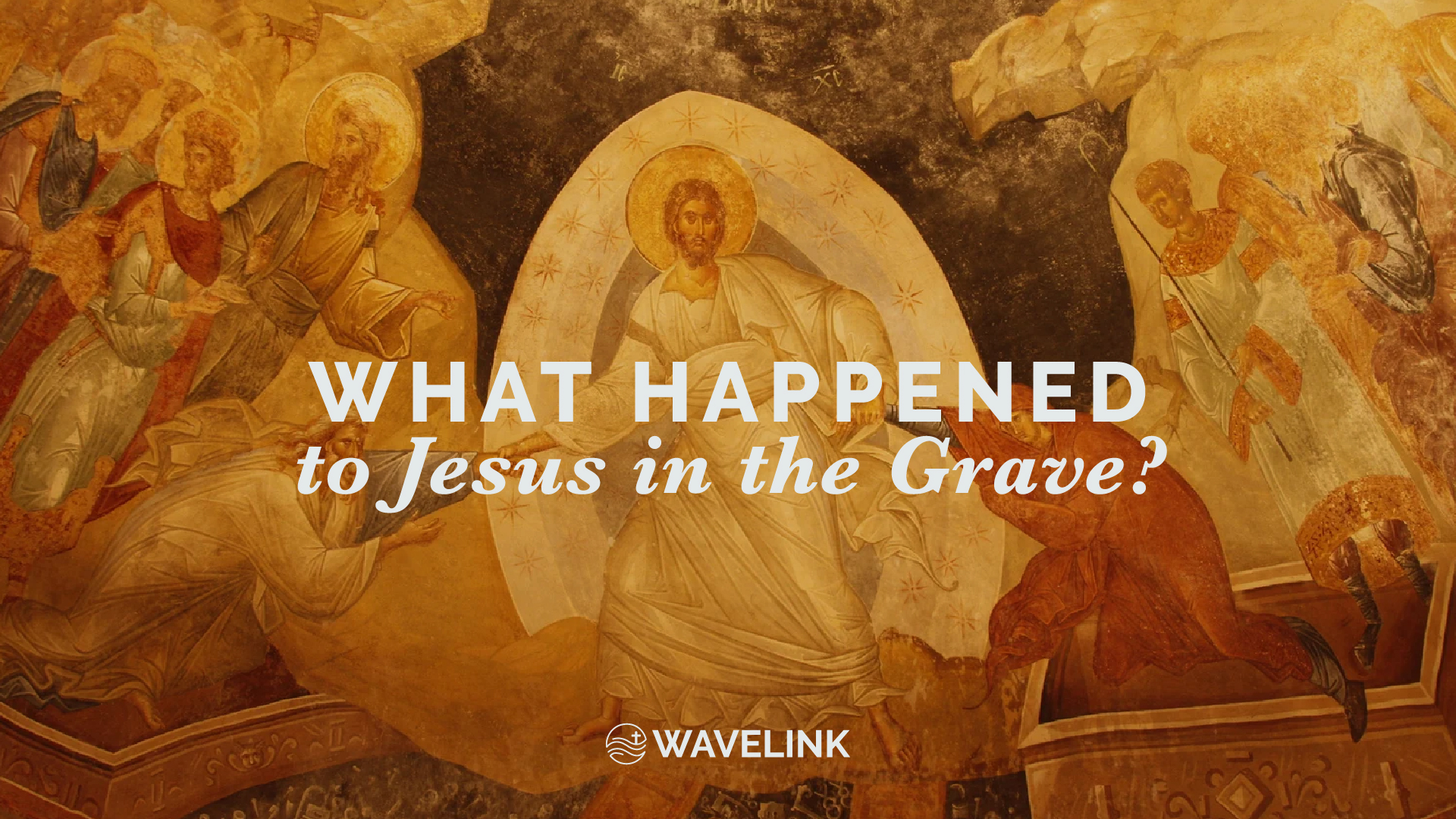
Based on these texts, early theologians believed Jesus went among the dead to proclaim the atonement was accomplished. John of Damascus, the last great early theologian, summarized the patristic consensus: Christ preached “the good news of peace,” releasing those who had believed but condemning those who did not (On the Orthodox Faith, 73). The still widely used patristic confession known as the Apostles’ Creed clearly says Jesus descendit ad infero, “descended to the dead” or “descended to hell.” But Rufinus in the fourth century, offered a minority report. He said Christ’s descent simply means he was “buried” (Commentary on the Apostles’ Creed, 52).
A second great symbol of the universal Christian faith received in the West, the Athanasian Creed, also affirms the descent. The descent doctrine gained widespread approval during the Middle Ages. It sealed Christ’s triumph over the principalities and powers (Col. 2:15; Eph. 4:8–10). Aquinas said Christ went to Hades, “not to suffer punishment” but “to show himself liberator of the living and the dead.” He freed those who looked to his coming but left the rebellious behind. John Calvin, doubting a literal descent, spiritualized it to mean Christ suffered torment. Today, theologians across the various Christian traditions interpret the descent in diverse ways, if they address it at all.
Proponents of Christ’s descent to the dead to proclaim liberty to the Old Testament saints believe they have a biblical case. However, the allusive dispersal of the scriptural references to the descent fosters diverse opinions among orthodox Christians. If the descent truly happened, which seems likely, Christ both demonstrated his kingship over the angels (Eph. 4:8–10) and declared freedom to the Old Testament saints who were once disobedient but expected him by faith (1 Pet. 3:20; 4:6). Their eternal freedom (and ours) was secured by Christ’s victory over sin and Satan at the cross.
That the Nicene Creed fails to mention the descent suggests the early church recognized the doctrine was a matter of theological freedom. I believe the doctrine can be affirmed, but with caution. First, it should not be required for fellowship. The descent seems to have a biblical basis, but it does not carry the same weight as those essential truths about the Lord that are clearly highlighted in the Bible. These essential truths include Christ’s eternal divine personhood and his human incarnation, as well as his death, resurrection, ascension, heavenly session, second coming, final judgment, and eternal reign. Second, some say Jesus suffered the fires of hell, but that view undermines the finality of the cross and should be denied by orthodox teachers. Third, the biblical presentation of the descent does not justify Roman Catholic ideas such as limbo and purgatory. Those teachings depend on extracanonical developments, which evangelicals do not recognize.
Malcolm B. Yarnell III
Benbrook, Texas
Holy Week, 2026
Note: A small portion of this essay comes from the recently published Word (B&H Publishing, 2026), the second volume of Theology for Every Person.
Upcoming Events



kids, youth, choirs, Wednesday Dinners, and Bible studies!