The Torn Veil
Dear Church Family,
I so loved that we celebrated the Lord’s Supper as well as baptism this last Sunday. God is so good! We also had one of our biggest groups gather for new member fellowship. I look forward to getting to know these saints and serving with them. Many of the pastors and staff at Lakeside have enjoyed long tenure and ministry, but change is inevitable. Pastor Carey Dyer has decided to be part-time with us. He will still lead the 8:30 and 9:45 services, but there will be other duties he will pass on to others. Carey has been passionate about music therapy and will utilize his gifts in that area of service for most of the week. We are grateful he can balance both roles and pray for this transition. Finally, I shared a little about the temple last week and saw another great devotional by Chad Bird, which I hope will encourage you all:
Between the Holy of Holies and the Holy Place hung a veil, both in the tabernacle and temple.
The New Testament presents two ways of understanding the veil’s symbolism.
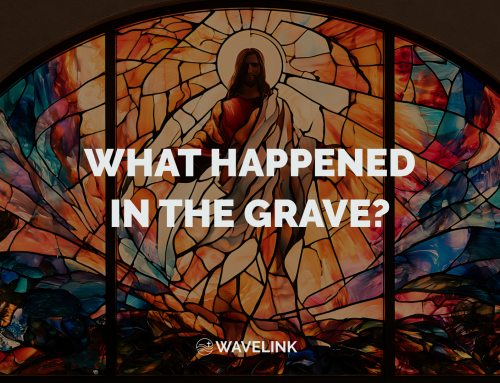
First, when “Jesus cried out again with a loud voice and yielded up his spirit… the curtain of the temple was torn in two, from top to bottom” (Matt. 27:50-51; cf. Mark 15:38; Luke 23:45).
This event signals the fulfillment and closure of the Day of Atonement (Leviticus 16). No longer would the high priest enter behind the veil with animal blood. Christ “entered once for all into the holy places… by means of his own blood, thus securing an eternal redemption” (Heb. 9:12).
The torn veil thus shows that access to God has been opened. We may now enter the Holy of Holies with confidence through the blood of Jesus (Heb. 10:19).
At the same time, it signals that God’s holiness is no longer confined to a single sacred space. Zechariah foresaw a day when ordinary objects would bear the inscription “Holy to the LORD,” indicating a spreading sanctification beyond the temple itself (Zech. 14:20-21). The tearing of the curtain marks the expansion of holiness outward.
The temple, though still standing for a time, had become an ex-sanctuary, its role fulfilled. In AD 70 it fell, and for Christians there remained only one true temple: Jesus the Messiah, whose resurrected body is our living sanctuary (John 2:19-21).
The second major way of understanding the veil comes from Hebrews. Believers have confidence to enter the holy places by the blood of Jesus, through the new and living way opened through the curtain, that is, his flesh (Heb. 10:19-22).
The OT veil marked the meeting place between God and humanity. In the incarnation, Jesus unites both sides of the curtain in his own person. His flesh becomes the place where God and humanity meet and the means by which we approach the Father.
The way is new because it belongs to the new covenant, and it is living because Jesus lives and gives life to those who come through him.
What was once a barrier has become a permanent entrance into God’s presence.
Press on!
Mark
Upcoming Events



kids, youth, choirs, Wednesday Dinners, and Bible studies!